No medicine should expire while someone needs it.
Somewhere a clinic is about to throw away boxes it never needed. A few kilometres away, another one has nothing left. Sawa shows them to each other – before the expiry date, not after.

Medicine is scarce. And yet, every year, perfectly good boxes are burned because they sat on the wrong shelf.
2 billion
people – about a quarter of humanity – can’t count on getting the medicines WHO calls essential.1








84 in 100
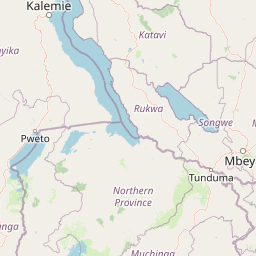
health facilities in Uganda ran out of essential medicines at least once in six months – mostly because demand jumped or a delivery came late.2
740,000
children under five died of pneumonia in 2019. WHO’s first choice of treatment: amoxicillin, a few days of tablets that dissolve in water.3
up to 8 %
of the stock in public medicine stores expires before anyone uses it. Not stolen, not broken – just in the wrong building.4
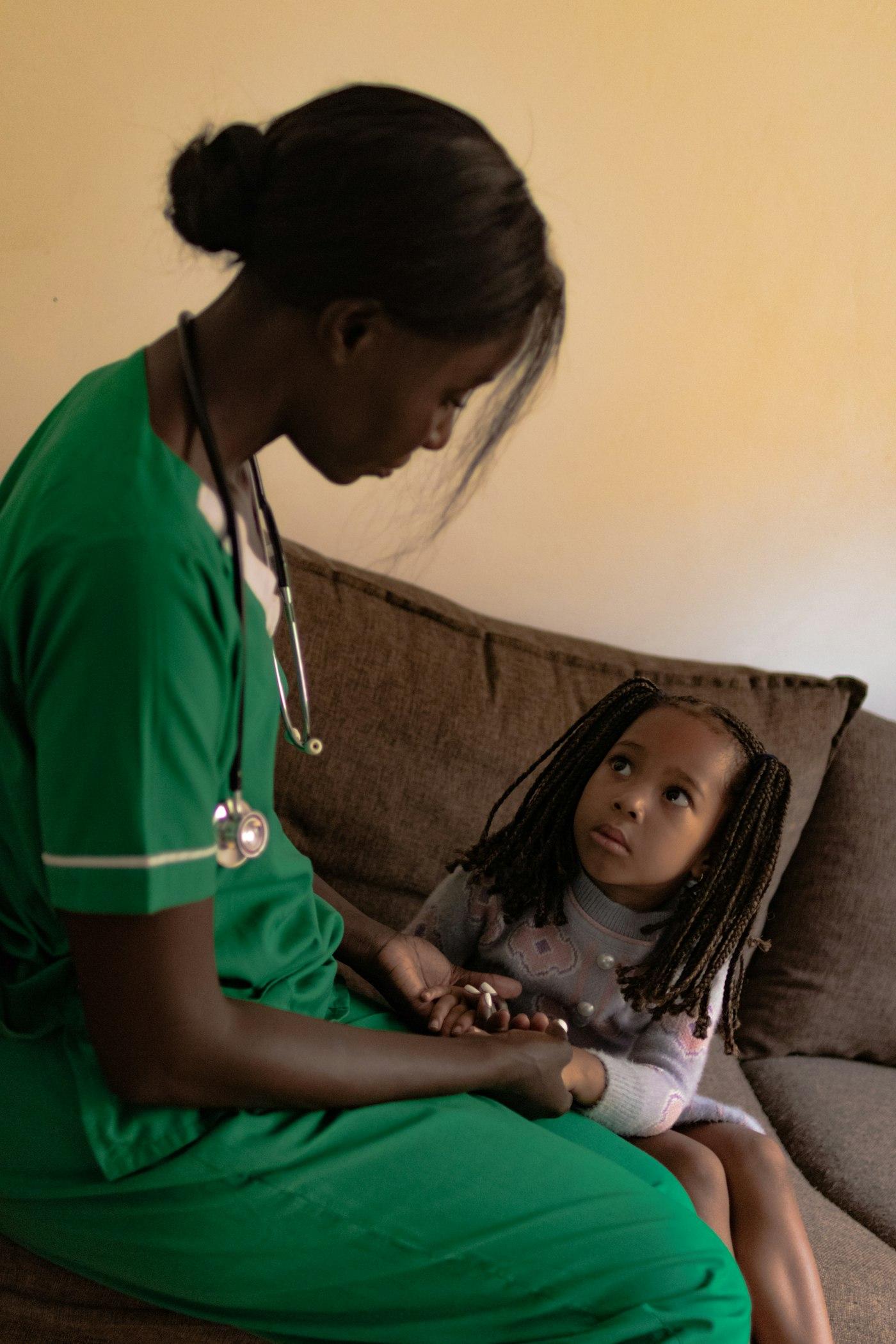
Nobody is doing anything wrong.
The two clinics just can’t see each other’s shelves.
Sawa is the shelf they share.
Each clinic lists what it has too much of and what it’s running out of. Sawa does the rest – and it takes about as long as writing it on the storeroom whiteboard.
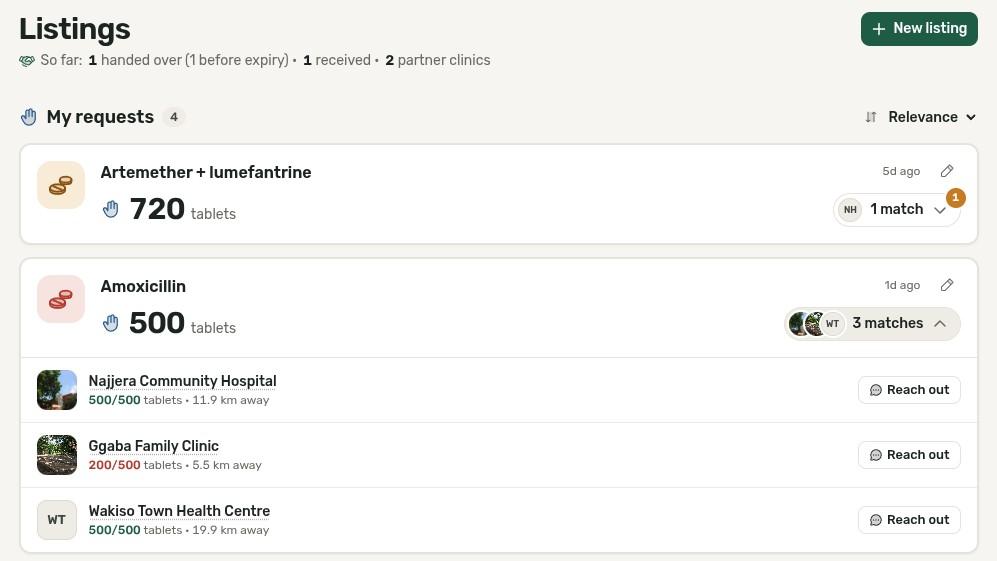
Every product comes from the WHO Essential Medicines List, so “Amox 250” means the same in every clinic.5 When the box arrives, the receiving clinic confirms – and both stock counts update. Clinics that still keep paper stock cards, like the fiche de stock used in Médecins Sans Frontières field projects, can simply photograph them: Sawa reads the movements and recalculates the balance.


Starting in Kampala.
The pilot links eight health facilities around the city – public health centres, NGO clinics in Kawempe and Bwaise, a non-profit hospital in Najjera. Places where shelves are full and empty at the same time.
Uganda has asked its clinics to pass surplus stock to each other since 2012. In one district only a third do, and clinics that never received the guidelines rarely do.6 Sawa turns that rule into a list anyone can open.

Your surplus is someone else’s supply.
Registering takes two minutes: name, type of facility, a pin on the map. Free for every public, NGO and non-profit health facility.
Sources 1 WHO – Access to essential medicines: “almost 2 billion people, one-third of the global population” without access. 2 Lugada E. et al. (2022) – Health supply chain system in Uganda: assessment of status and of performance of health facilities, Journal of Pharmaceutical Policy and Practice 15:58 (84 % of 128 facilities reported stock-outs in six months). 3 WHO fact sheet – Pneumonia in children (740,180 deaths of children under five in 2019; first-line treatment: amoxicillin dispersible tablets). 4 Medicine wastage in Ethiopian public health facilities – local studies report 4.9 – 8.0 % of stock lost to expiry (e.g. Frontiers in Medicine, 2024). 5 WHO fact sheet – Essential medicines (2025 Model List: 523 medicines for adults, 374 for children). 6 Kyalisiima Z. et al. (2023) – Compliance of public health facilities with essential medicines and health supplies redistribution guidelines in Mbale district, Eastern Uganda, Journal of Pharmaceutical Policy and Practice 16 (about one third compliant).